CLARUS
Know Early, Act Fast.
Clarus is a wearable microneedle biosensing system that helps travelers detect early signs of illness in real time. Paired with a mobile app, it delivers clear health insights while contributing anonymized data to support faster global outbreak detection.
TIMELINE
20 Weeks
Fall 2025
MY ROLE
UX/UI Designer
Product Designer
TEAM
Gabrielle Lewis
Spencer Henderson
Hyunsoo Eun
TOOLS
Figma
Rhinoceros
Keyshot
My Role
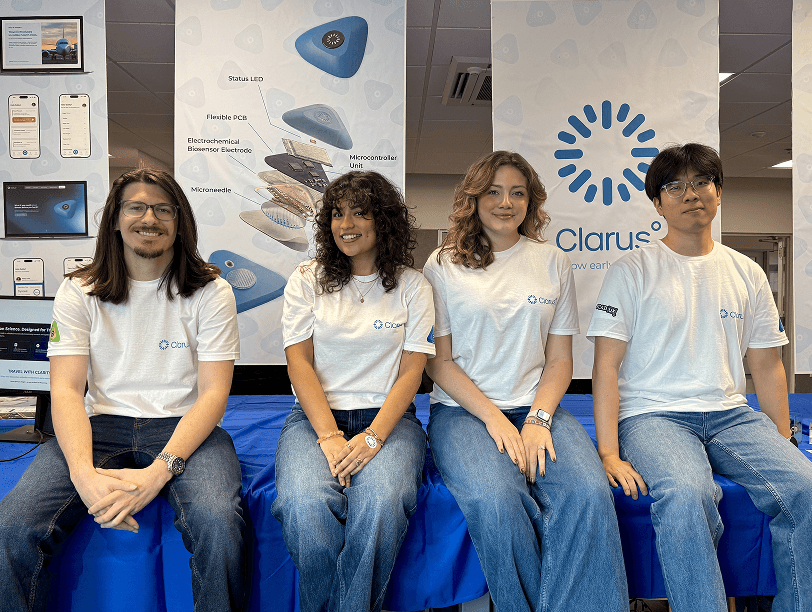
I led the UX/UI design for Clarus’ consumer website, focusing on how users first understand and trust the product. I simplified complex health information into clear, intuitive experiences that feel approachable from the start.
As a Product Designer, I created the initial concept sketches for the microneedle patch and collaborated with an industrial designer to refine the final form. I focused on making the device feel both credible and comfortable while keeping the physical and digital experience connected.
Background
As global travel increases, people are exposed to invisible health risks like malaria, dengue, and other infections. Most travelers rely on reactive systems, waiting for symptoms or visiting clinics, while public health systems depend on delayed, fragmented data.


Why it Matters?
This gap creates uncertainty for individuals and slows down outbreak detection at a larger scale. There’s a clear need for a system that connects personal health awareness with real-time public health insights.
Research
Grounded in real-world research.
SME's Interviews
Articles
Responses
50+
250
6
1700+ Data Points
Main Insights

Travel shifts
priorities
Symptoms are ignores earlier
Healthcare is readtive
Users want reasurance not complexity
Trust is built through clarity

Epidemiologist
Travelers
These insights led us to define a more focused target audience.
The Solution
Clarus is a wearable biosensing system that enables travelers to detect early signs of infection in real time, providing clear, actionable insights before symptoms worsen.
Clarus Ecosystem



Patch
Mobile App
Data System
How does this Ecosystem works?
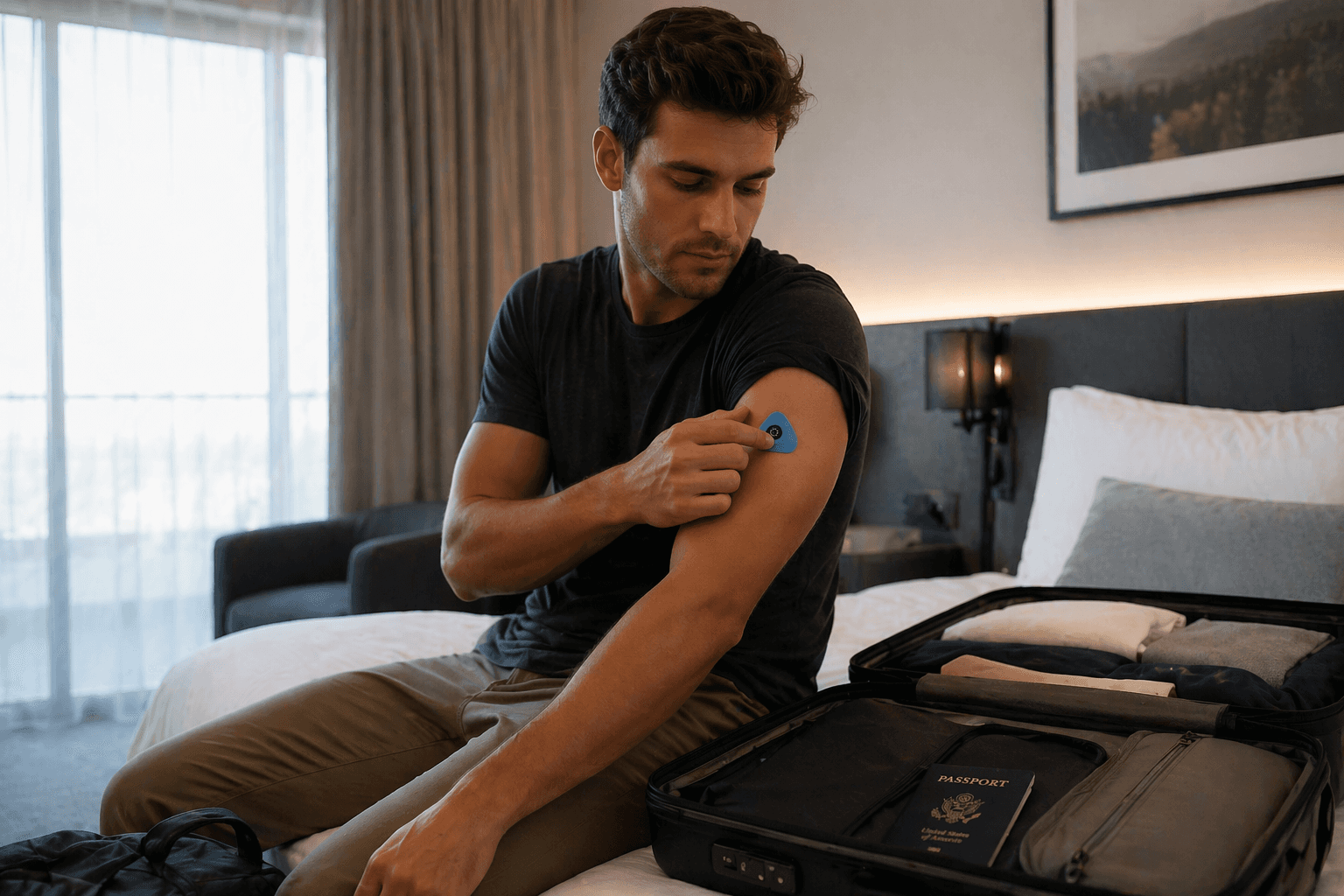
Apply
The user applies the microneedle patch before or during travel, integrating it seamlessly into their routine.
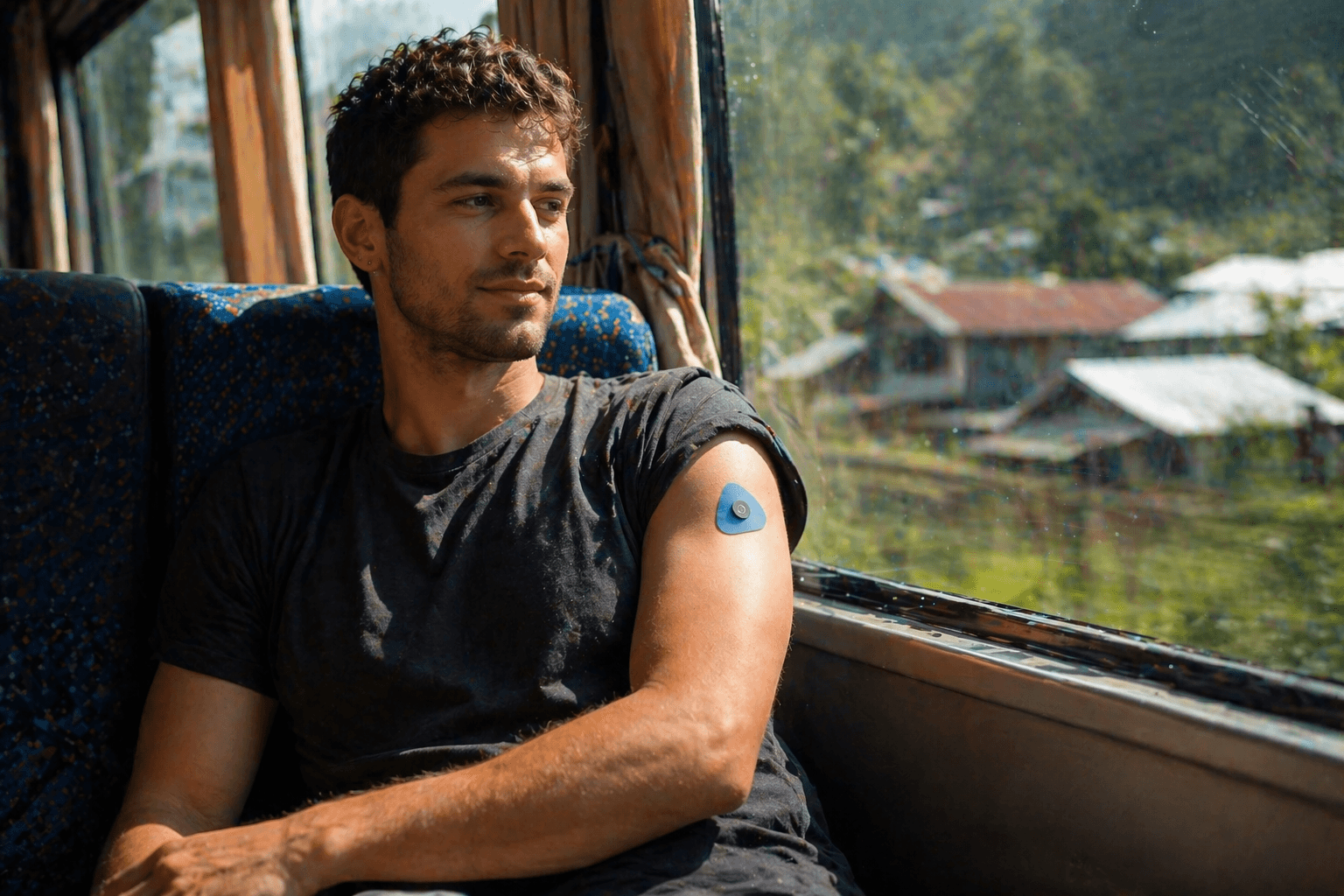
Sense
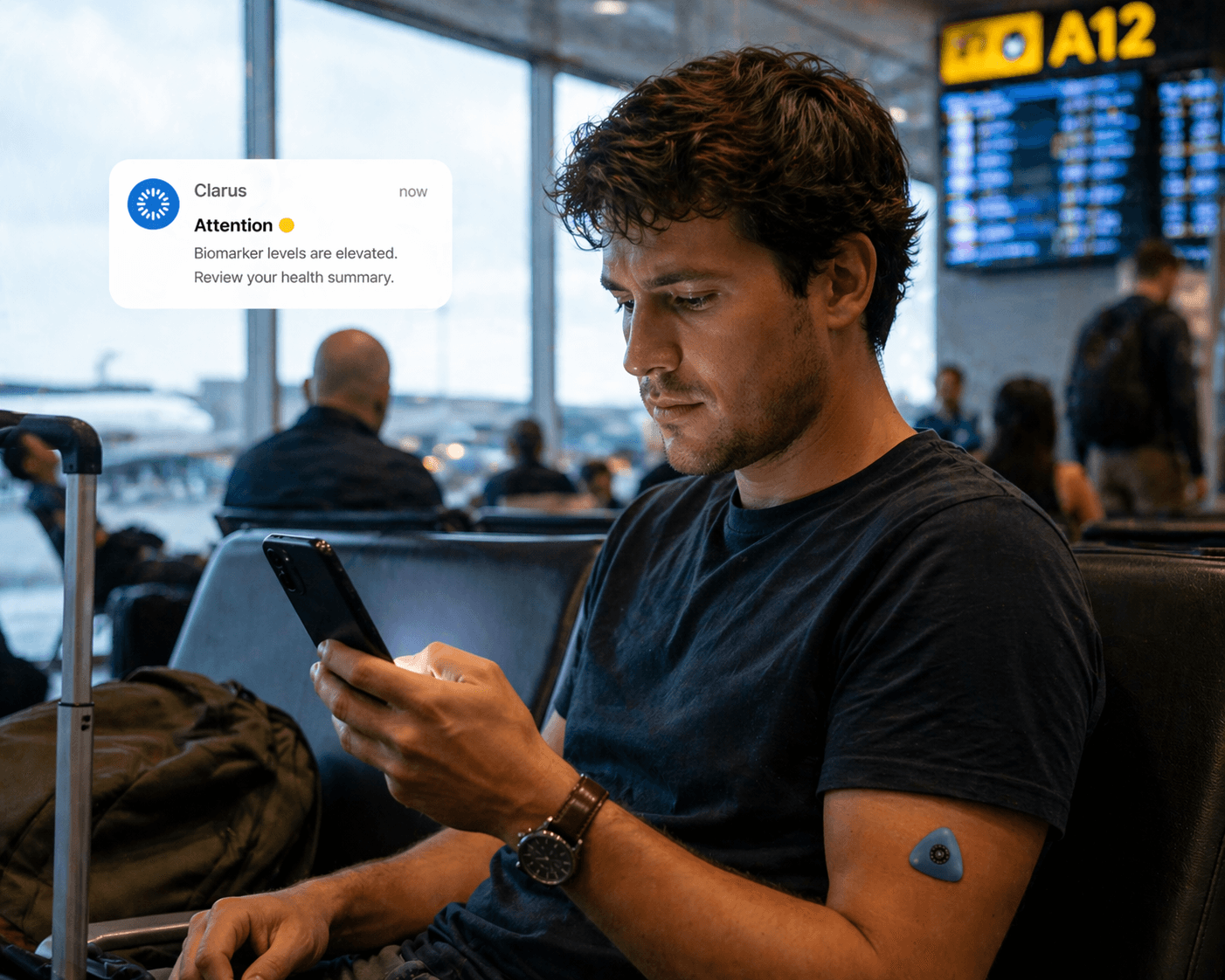
The patch continuously collects biological signals from the skin, detecting early changes linked to infection.
Process
Collected data is analyzed to identify patterns and potential risks before symptoms appear.
Translate
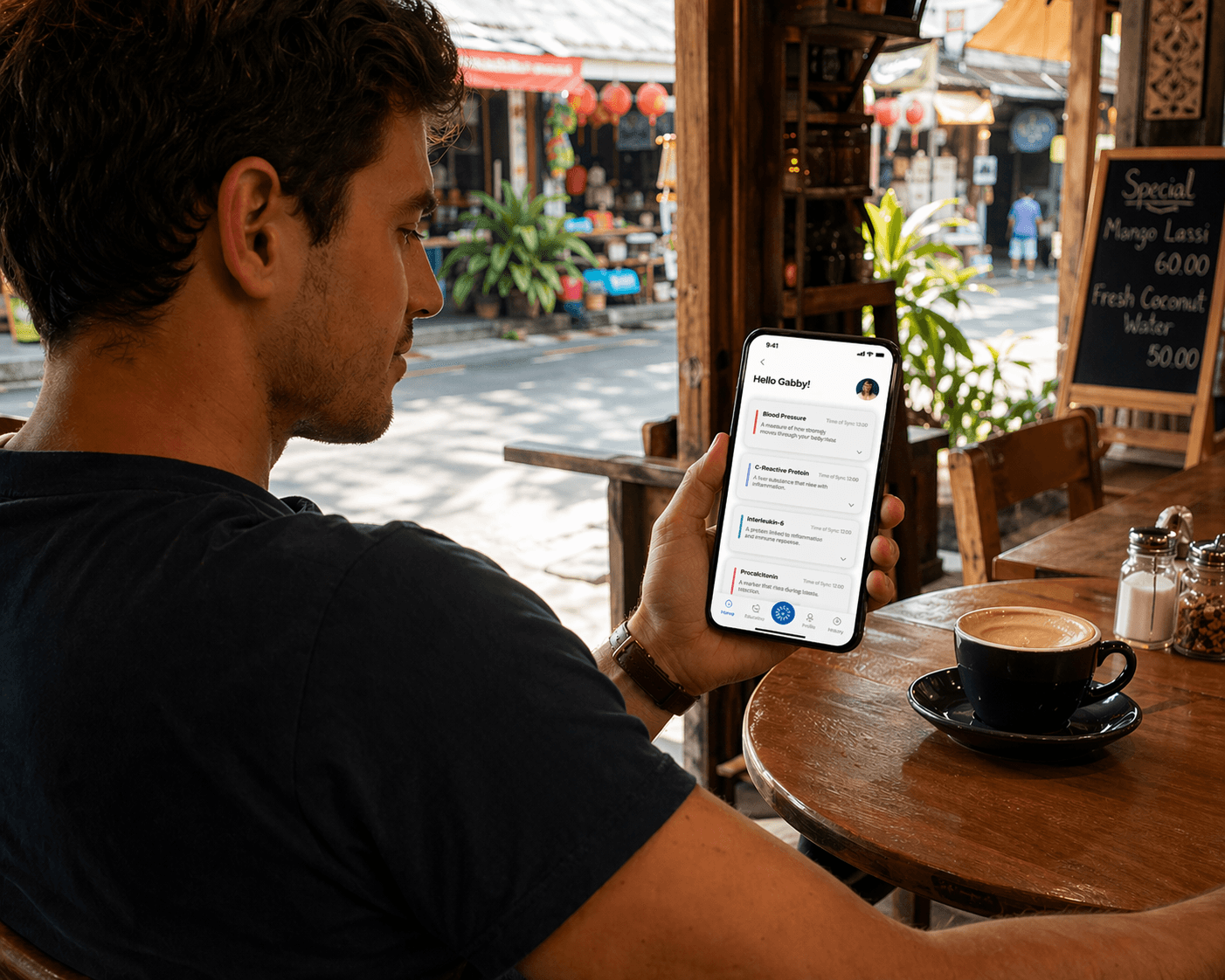
Complex biomarker data is converted into clear, simple health feedback.
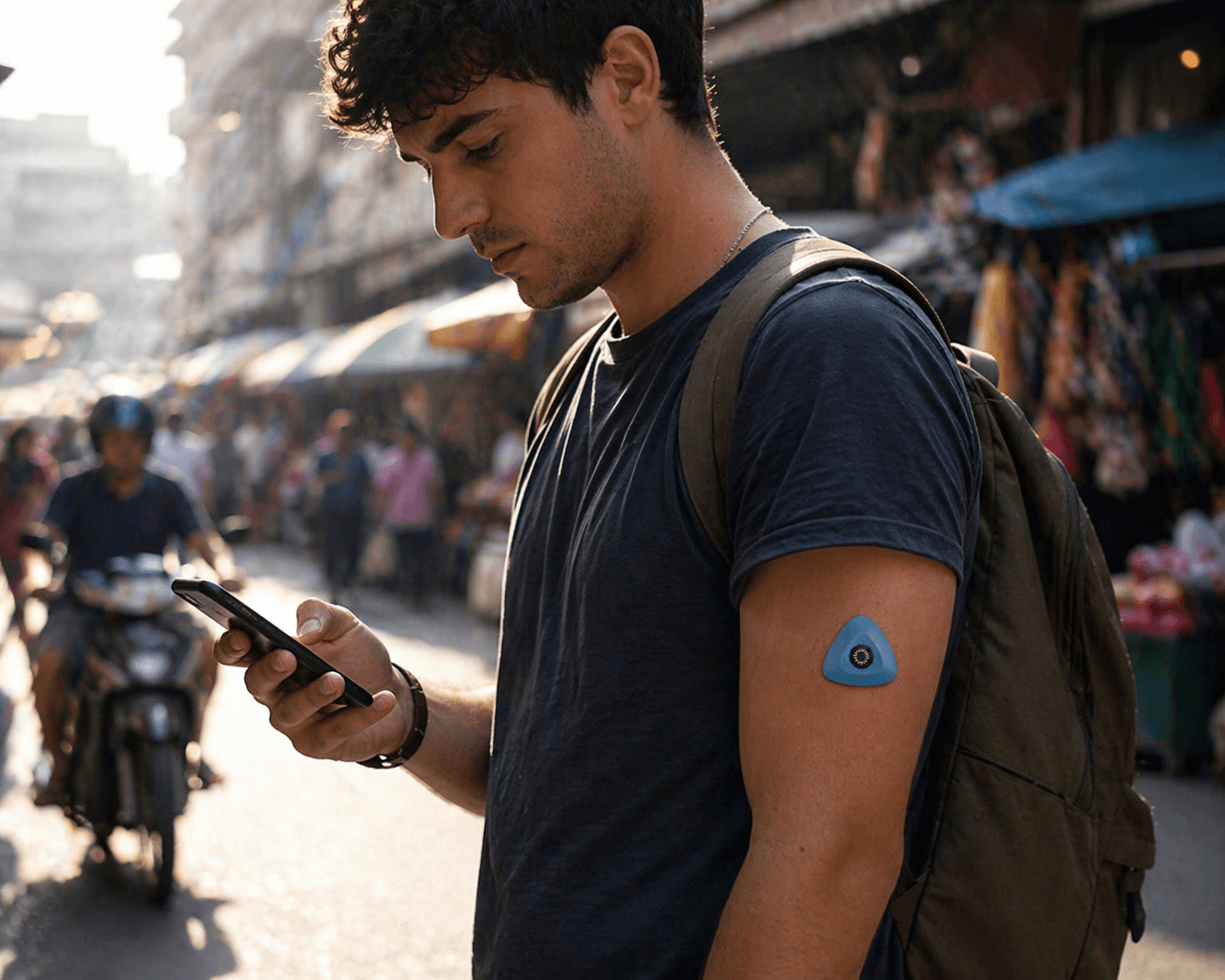
Inform
The mobile app delivers real-time updates, guidance, and contextual alerts based on location and risk level.
Contribute
Anonymized data feeds into a larger system, supporting real-time public health monitoring and early outbreak detection.

Development
We wanted to make sure to create a product that prioritize:
Clarity over Complexity
Reassurance over precision
Non-invasive precision
Trust through transparency
Physical Prototype:
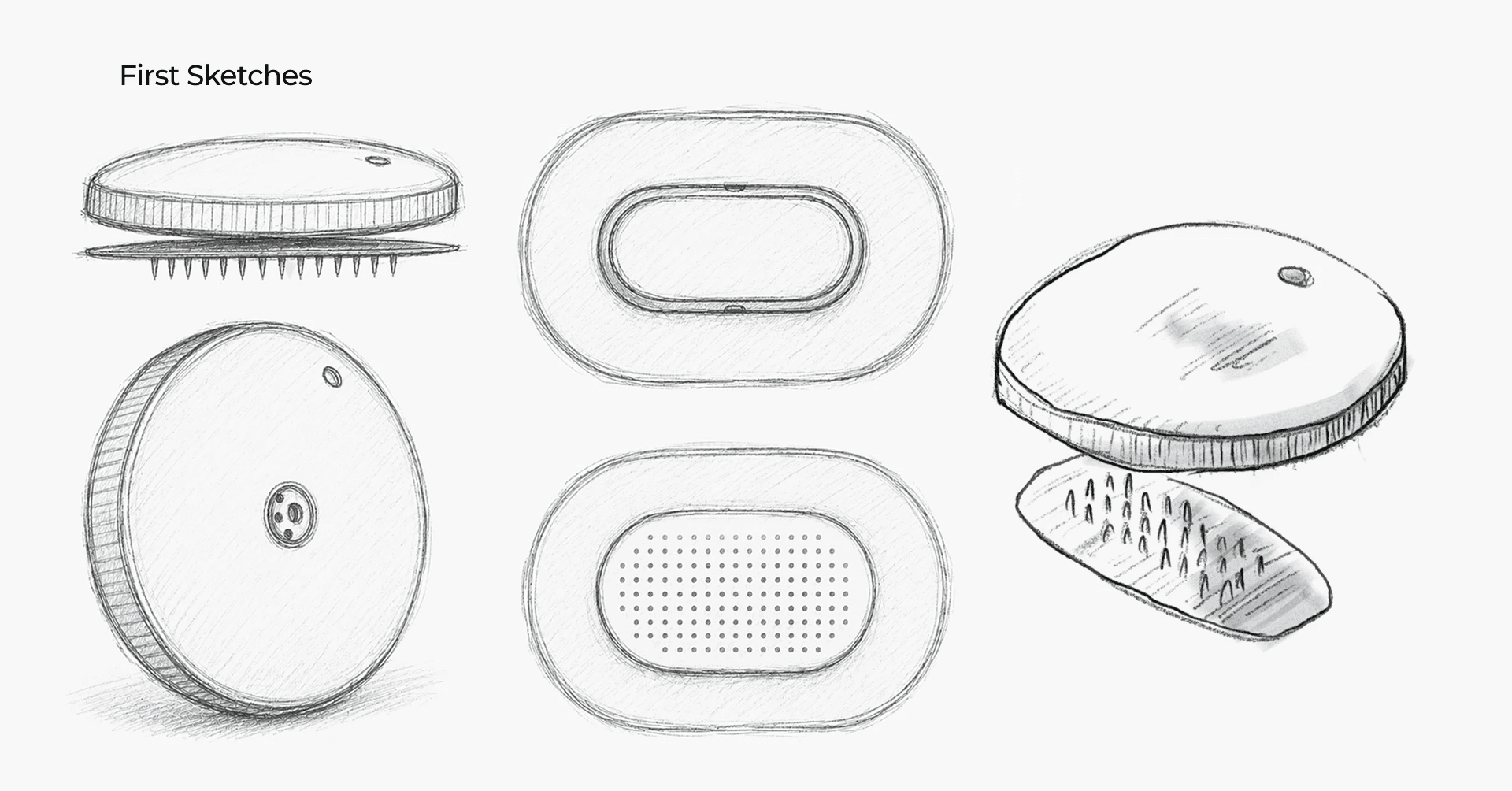
Early explorations focused on translating a highly technical concept into a form that feels approachable and wearable. Through sketching and low- to mid-fidelity prototypes, we explored scale, shape, and materiality, seeking a balance between medical credibility and everyday comfort. Each iteration aimed to reduce intimidation while maintaining trust in the product’s functionality.
Mobile App:
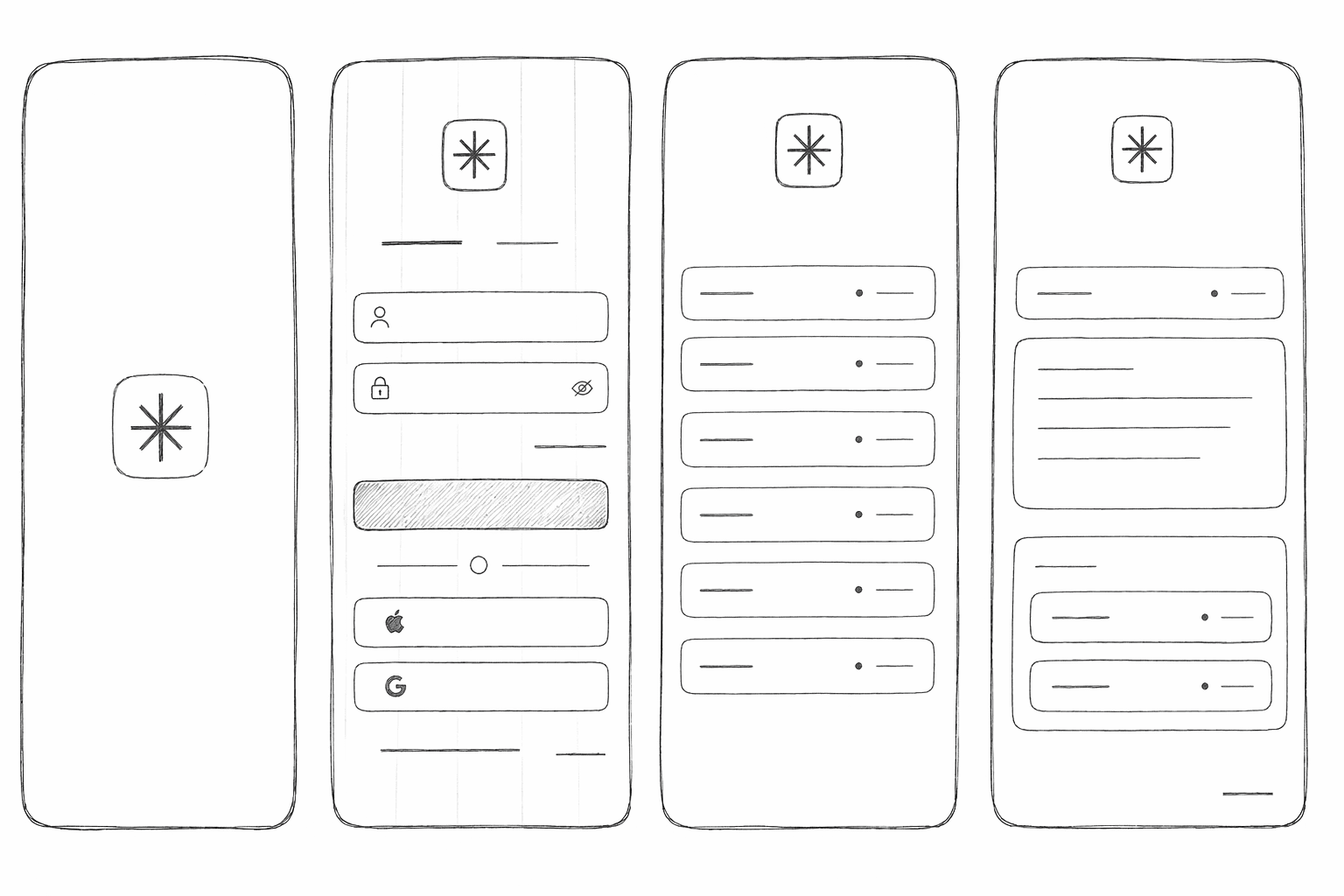
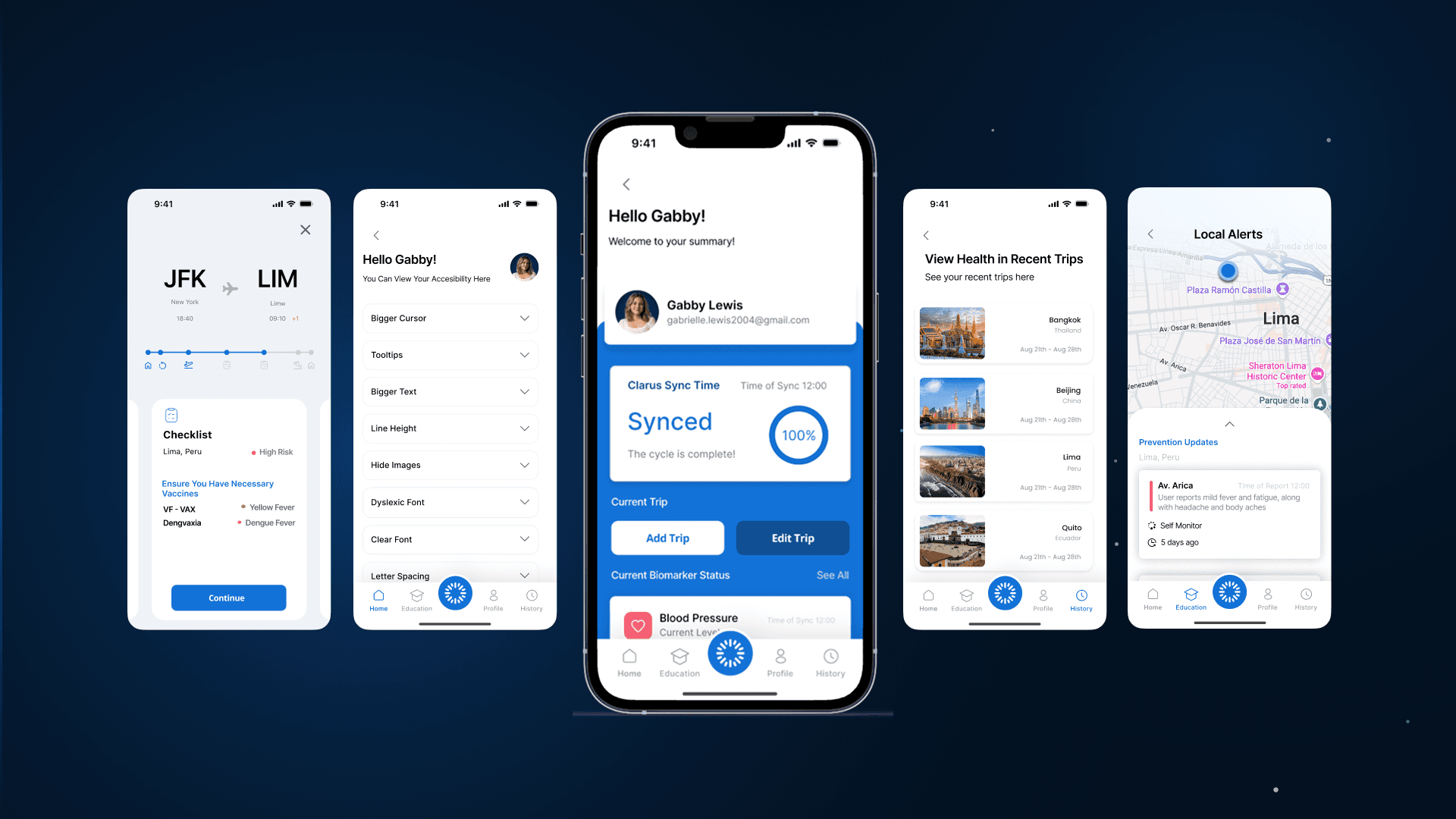
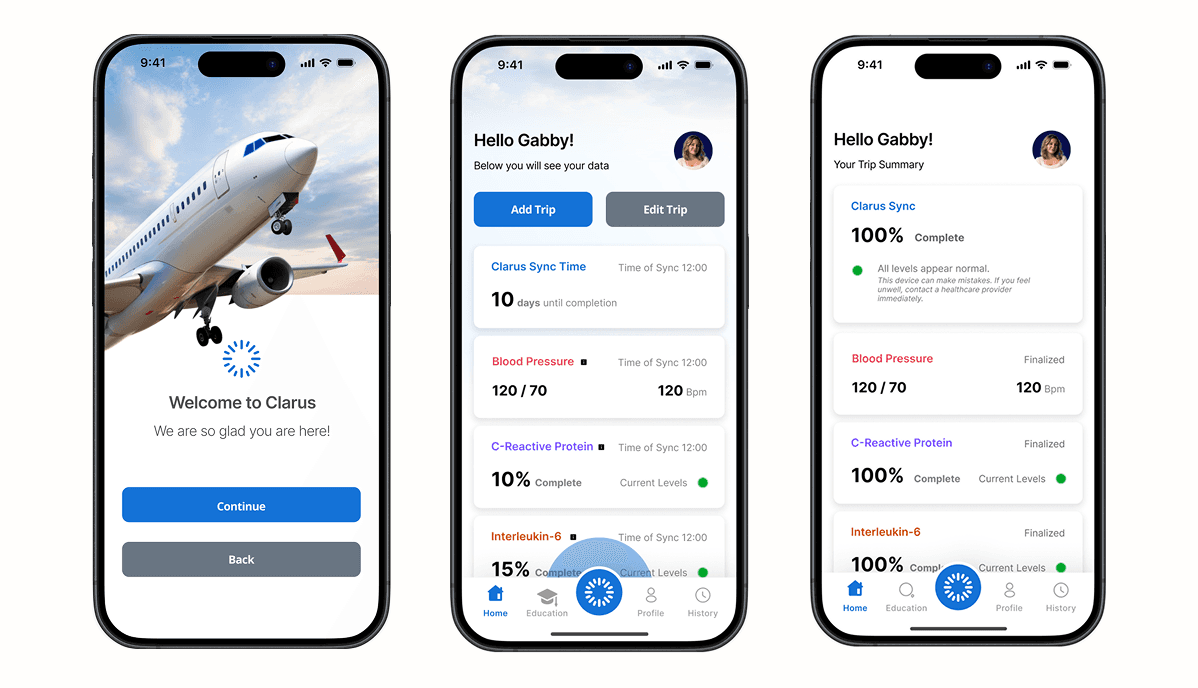
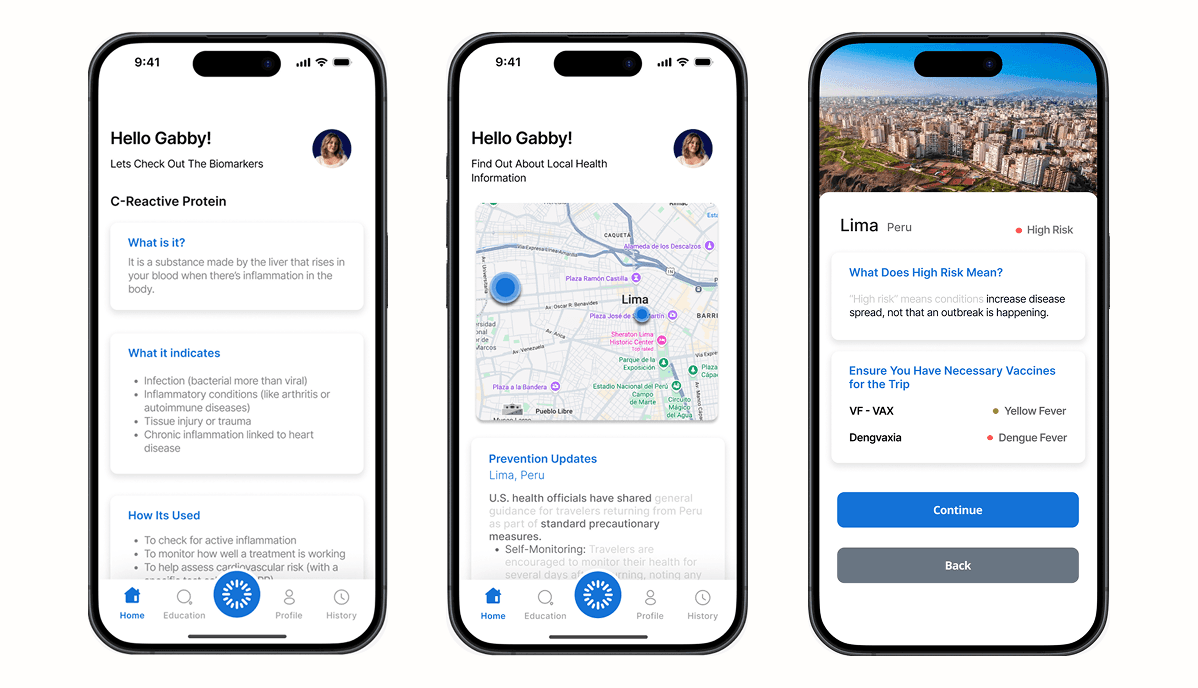
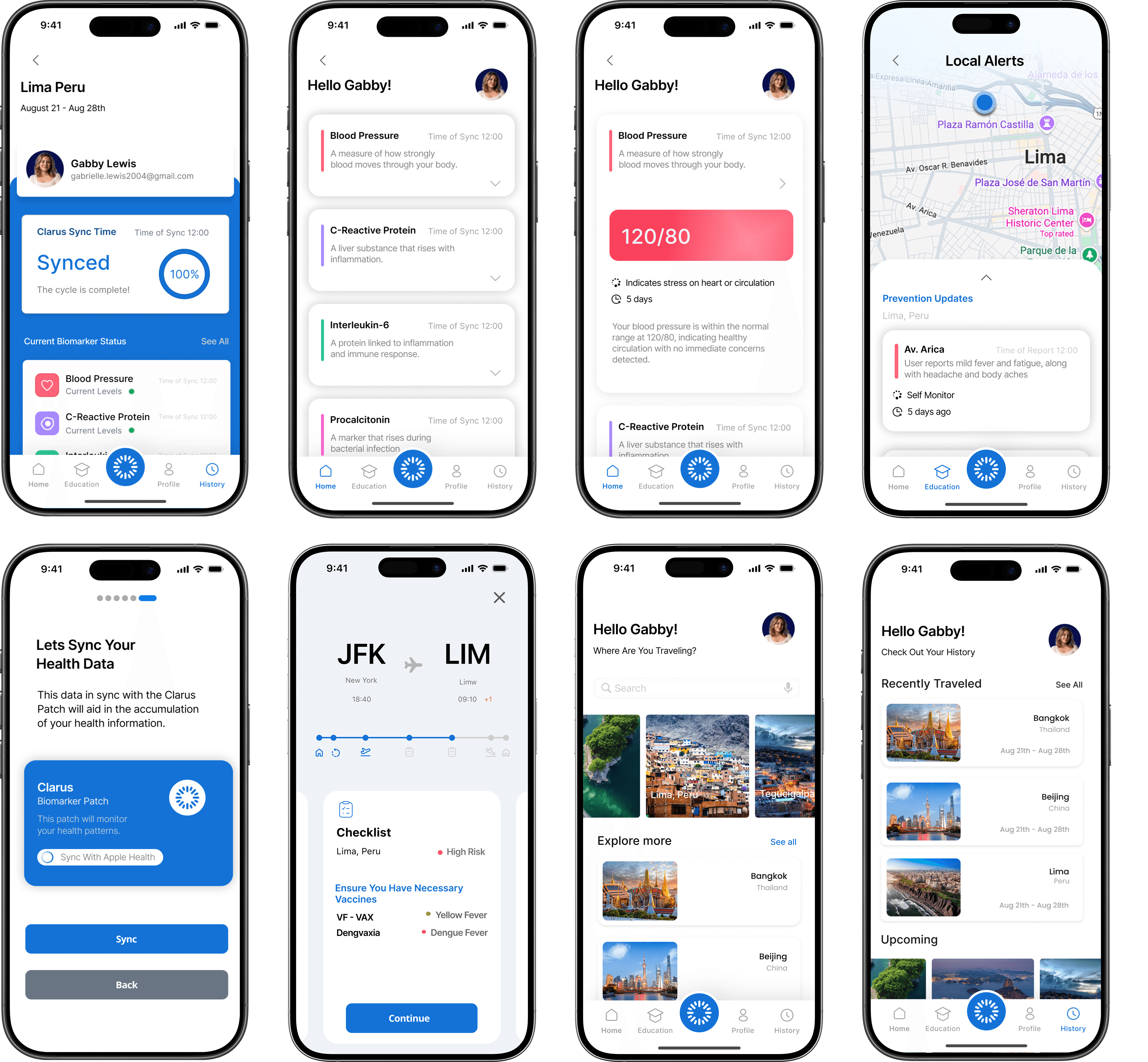
The mobile app serves as the primary touchpoint for users, translating real-time data into clear, actionable feedback. Through simple navigation and visual cues, it enables users to quickly understand their health status and make informed decisions while traveling.
Website Design:
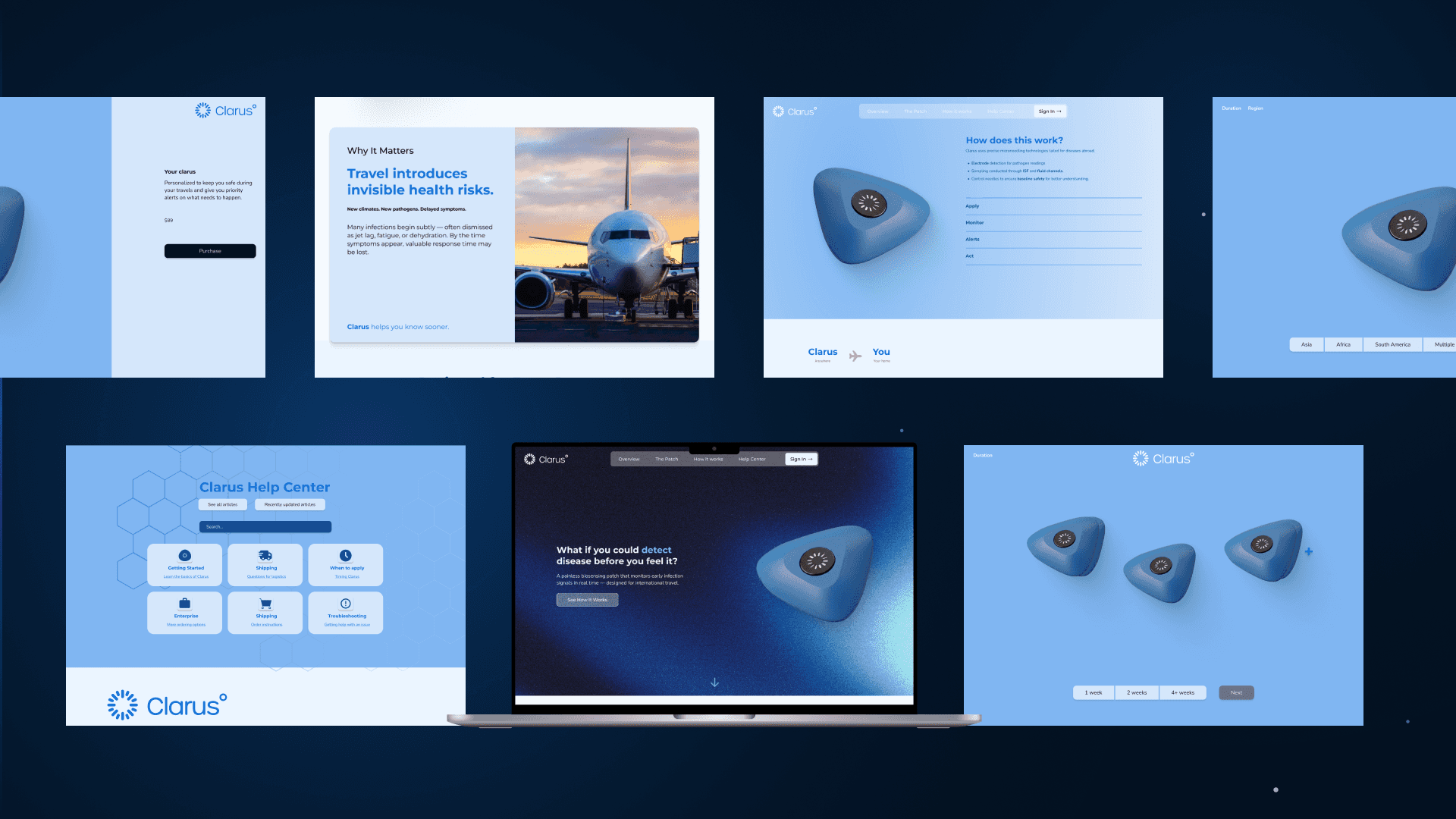
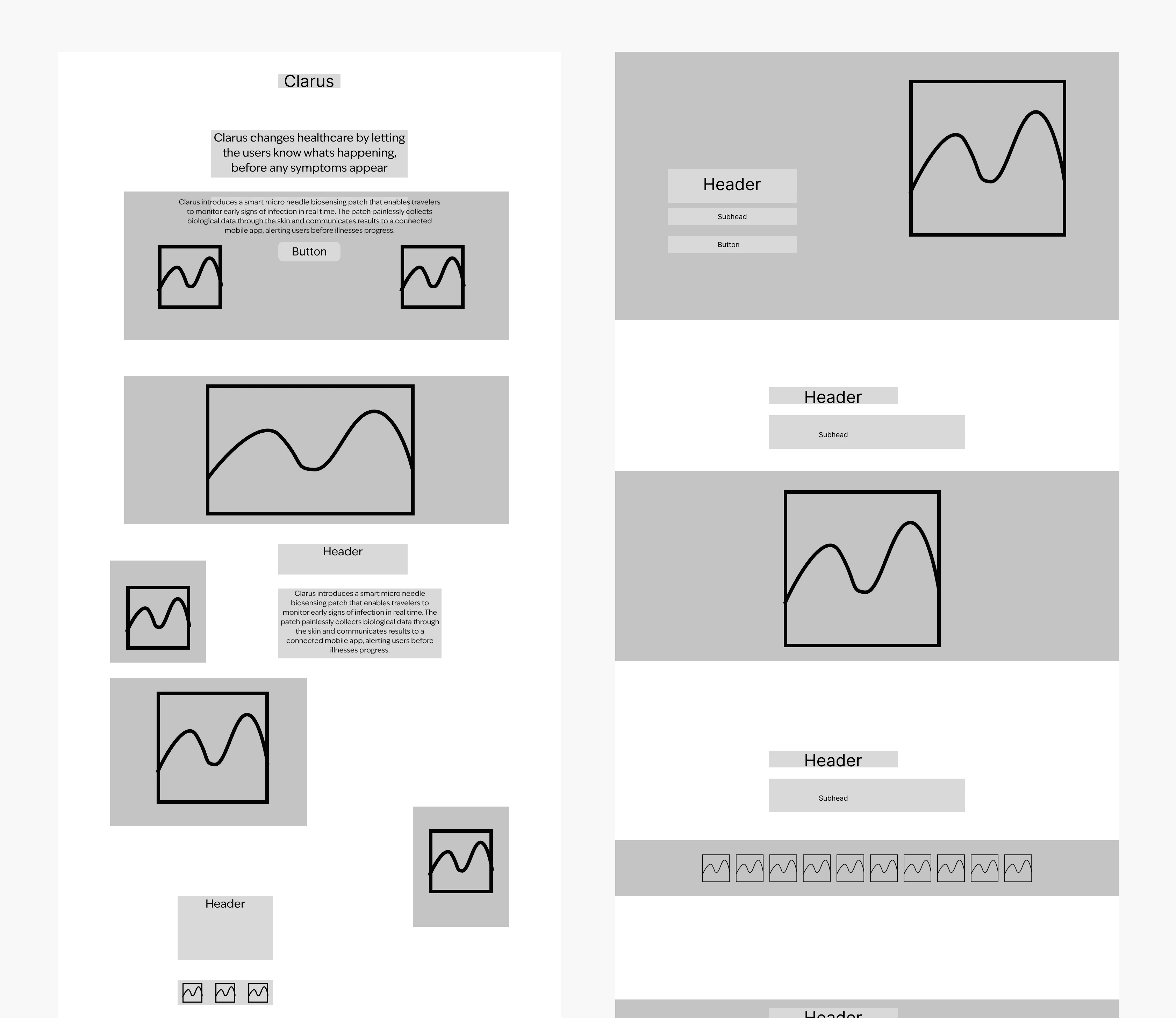
The digital experience translates complex health data into clear, intuitive interactions. Designed to minimize cognitive load, the interface prioritizes simplicity, guiding users through their health status with confidence and ease.
User Testing
User testing was conducted through two rounds of moderated usability sessions (remote and in-person) with travelers and subject matter experts, using scenario-based tasks to evaluate the full experience from onboarding to post-trip review.
Participants interacted with the following screens during the testing sessions:
Key Insights from User Testing
“I understand it… but what does it actually mean for me?”
Users could see their health data, but struggled to interpret what to do with it, clarity of meaning is still a gap.
“I just want reassurance, not numbers.”
Travelers aren’t looking for deep medical analytics, they want simple, clear confirmation that they’re okay.
“I didn’t know where to check my health status first.”
Users hesitated when trying to find key information, navigation is clear overall, but not immediately obvious for critical actions.
This feels easy and intuitive.”
Core flows like onboarding and trip setup were completed smoothly with little to no confusion, showing strong usability.
“I need clearer explanations for first-time use.”
Users wanted simpler language and guidance, especially around biomarkers and how the system works.
Final Designs
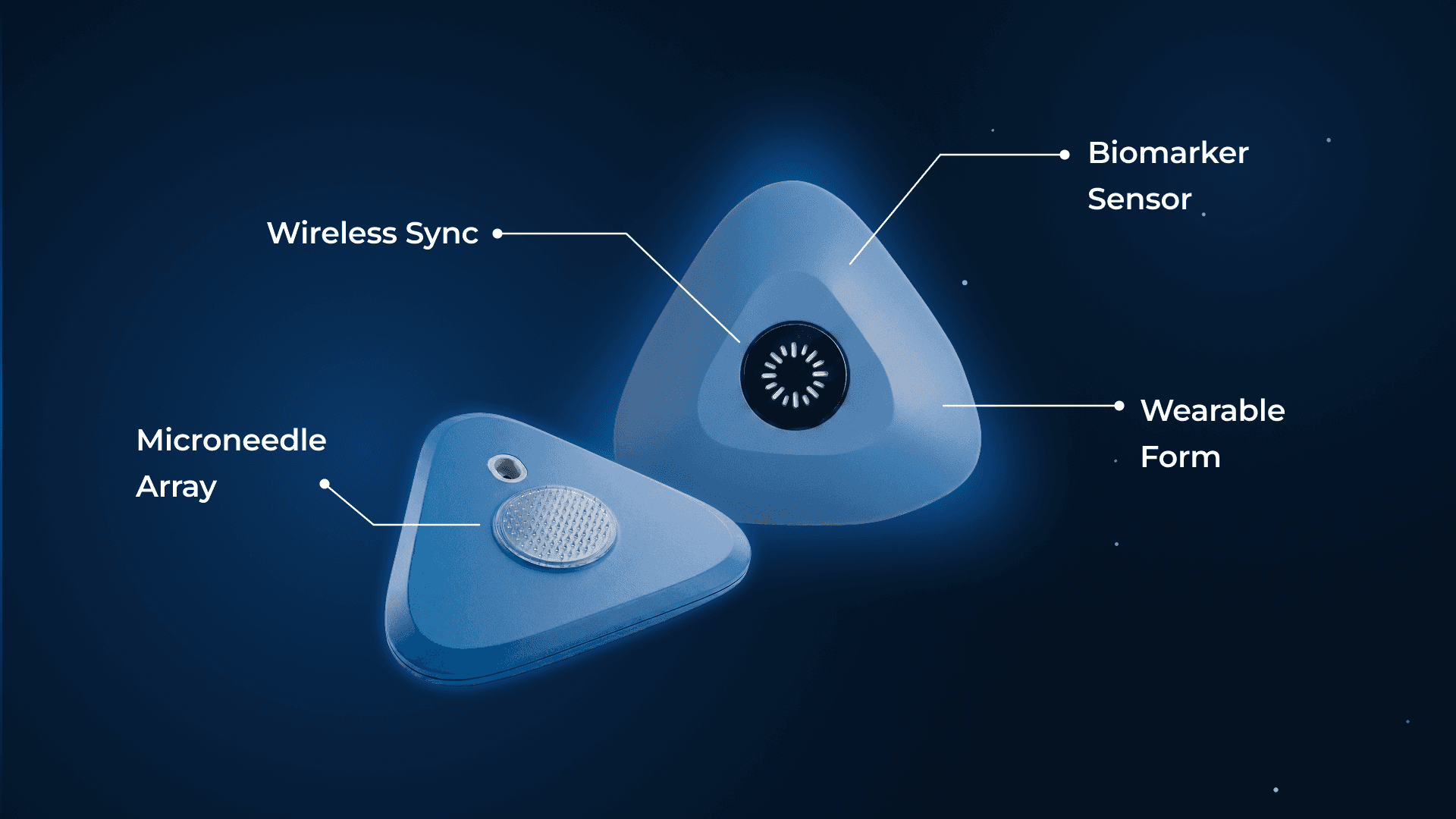
Clarus Patch
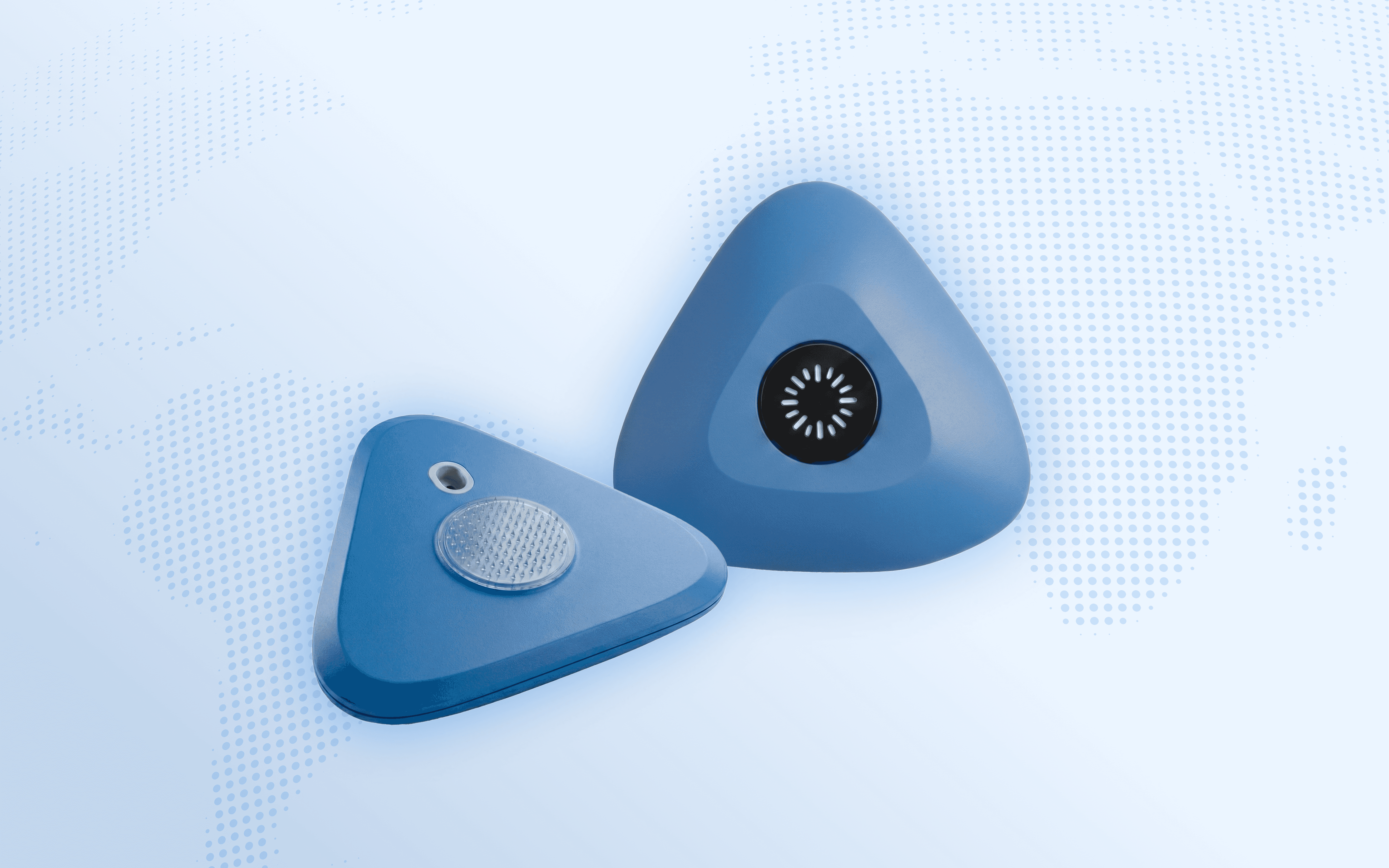
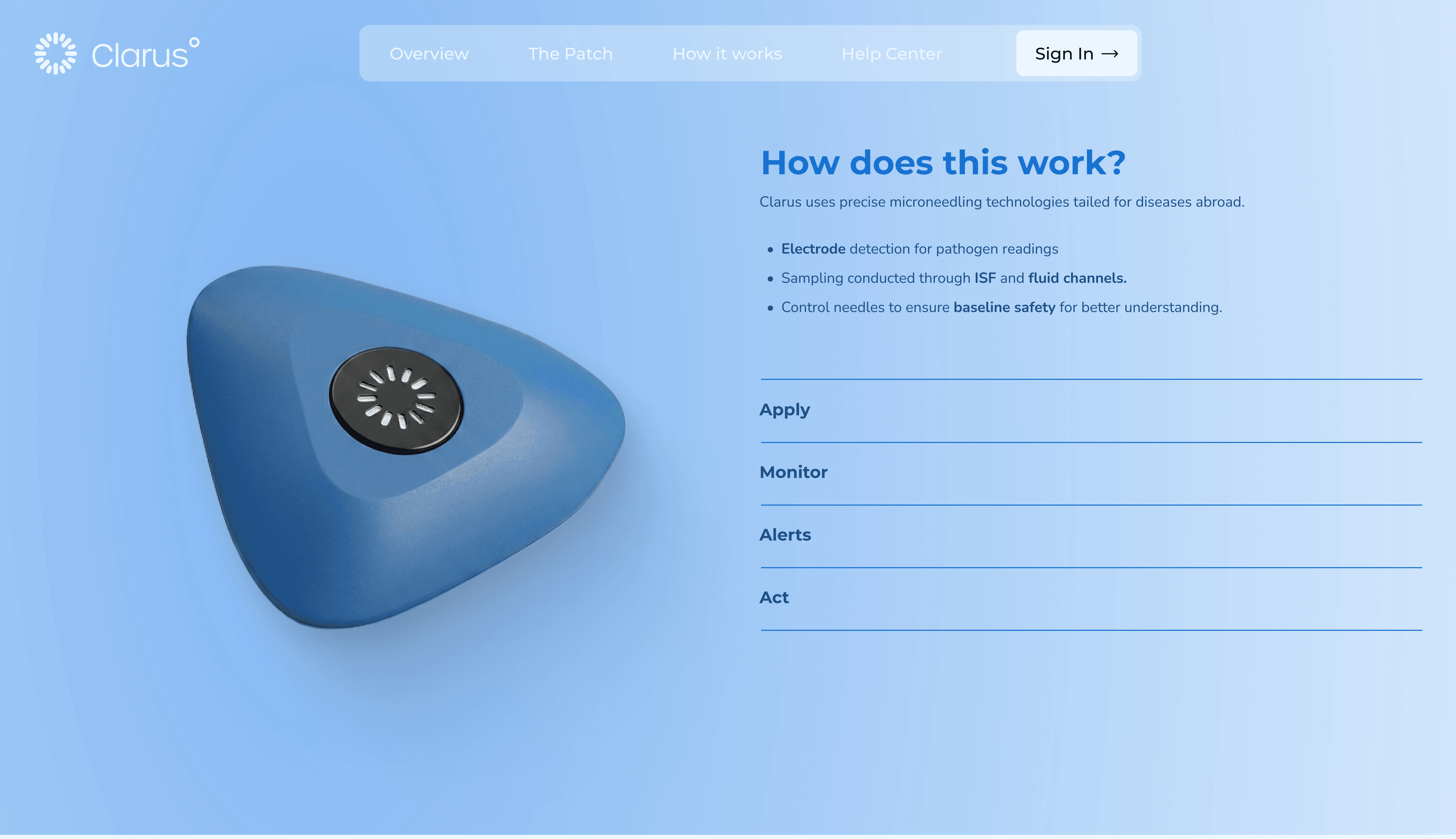
The Clarus patch is a small, wearable device that passively monitors early signs of infection throughout a trip. Designed to feel comfortable and non-intimidating, it collects data in the background so users can stay informed without changing their routine.
Mobile App
The Clarus app transforms real-time biosensor data into simple, actionable insights, giving travelers a clear understanding of their health throughout their journey. Designed for clarity and ease of use, it supports users from setup to monitoring with minimal effort and maximum confidence.
Consumer Website
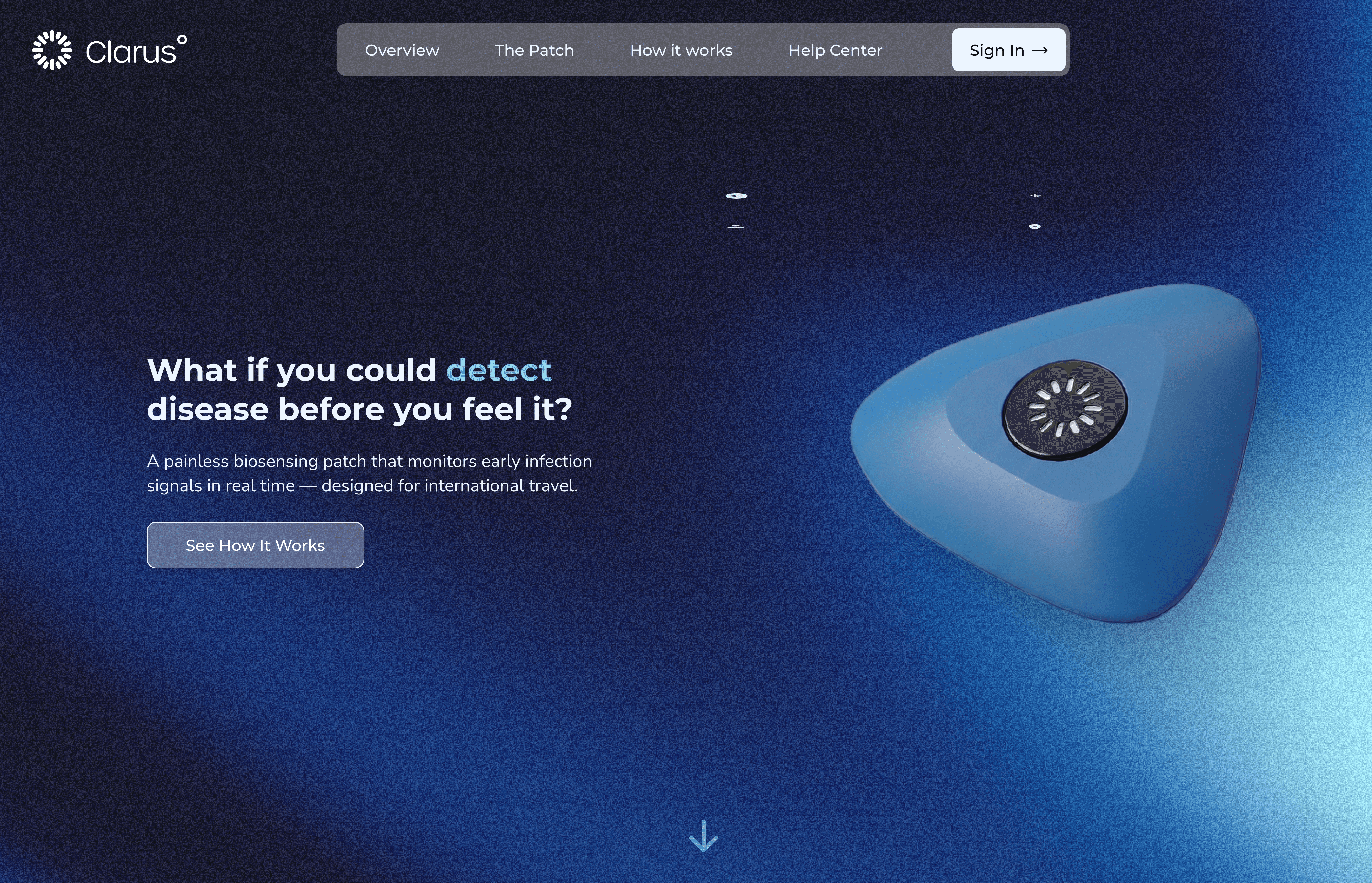
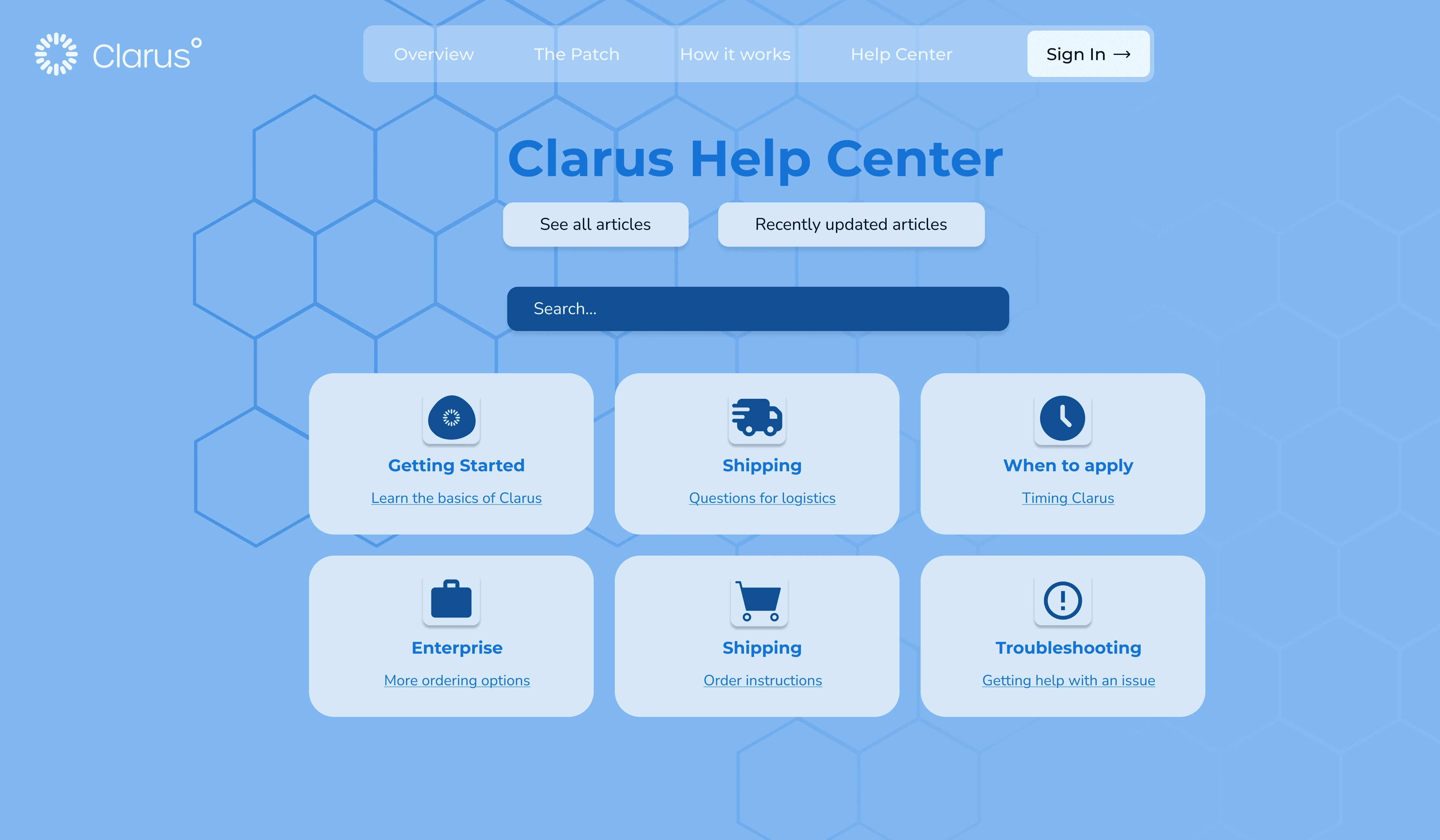
The Clarus website helps travelers understand the product quickly and feel confident using it. It combines simple explanations, visual guidance, and trip-focused information to make health monitoring feel approachable and relevant before the journey even begins.
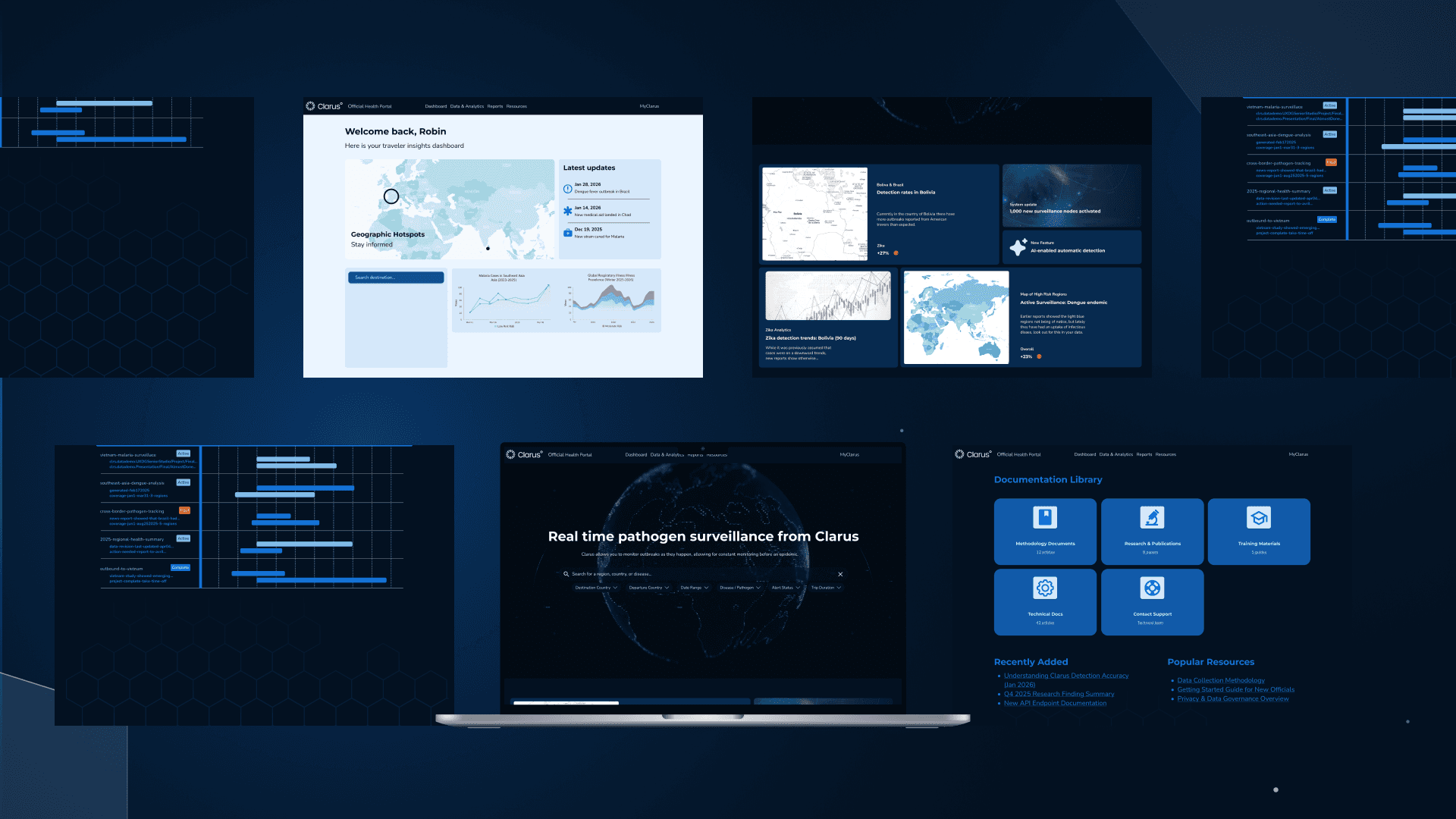
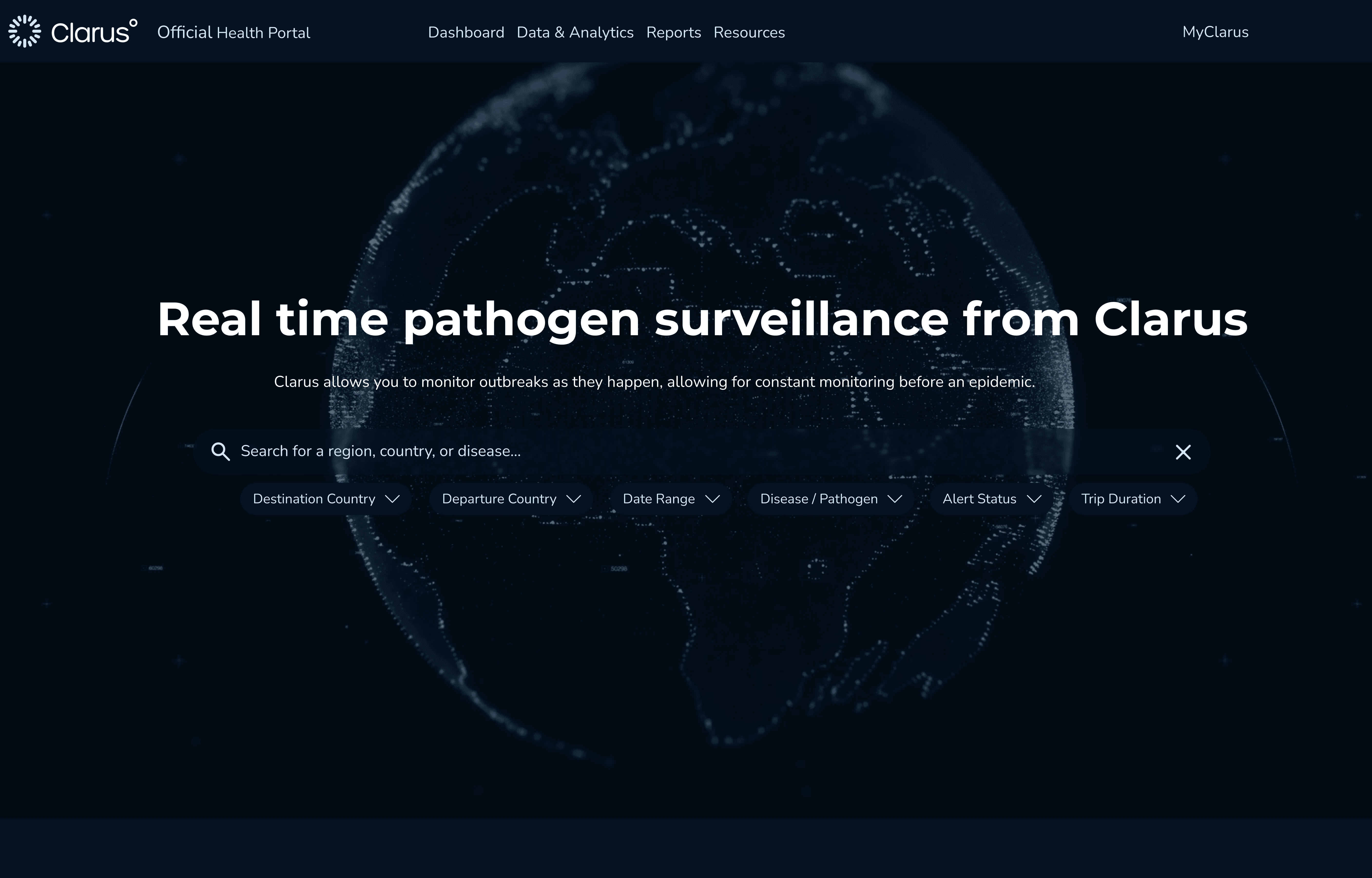
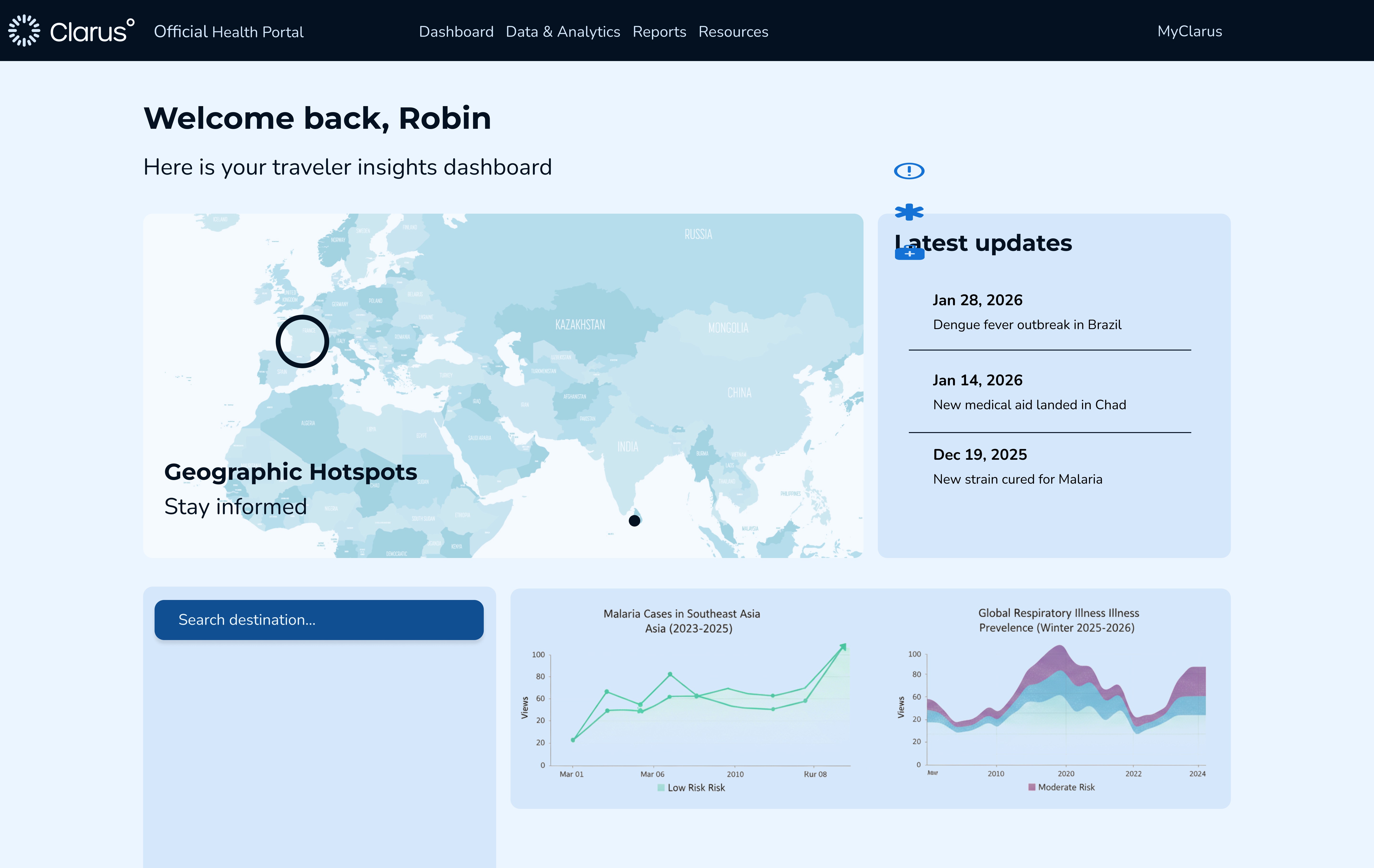
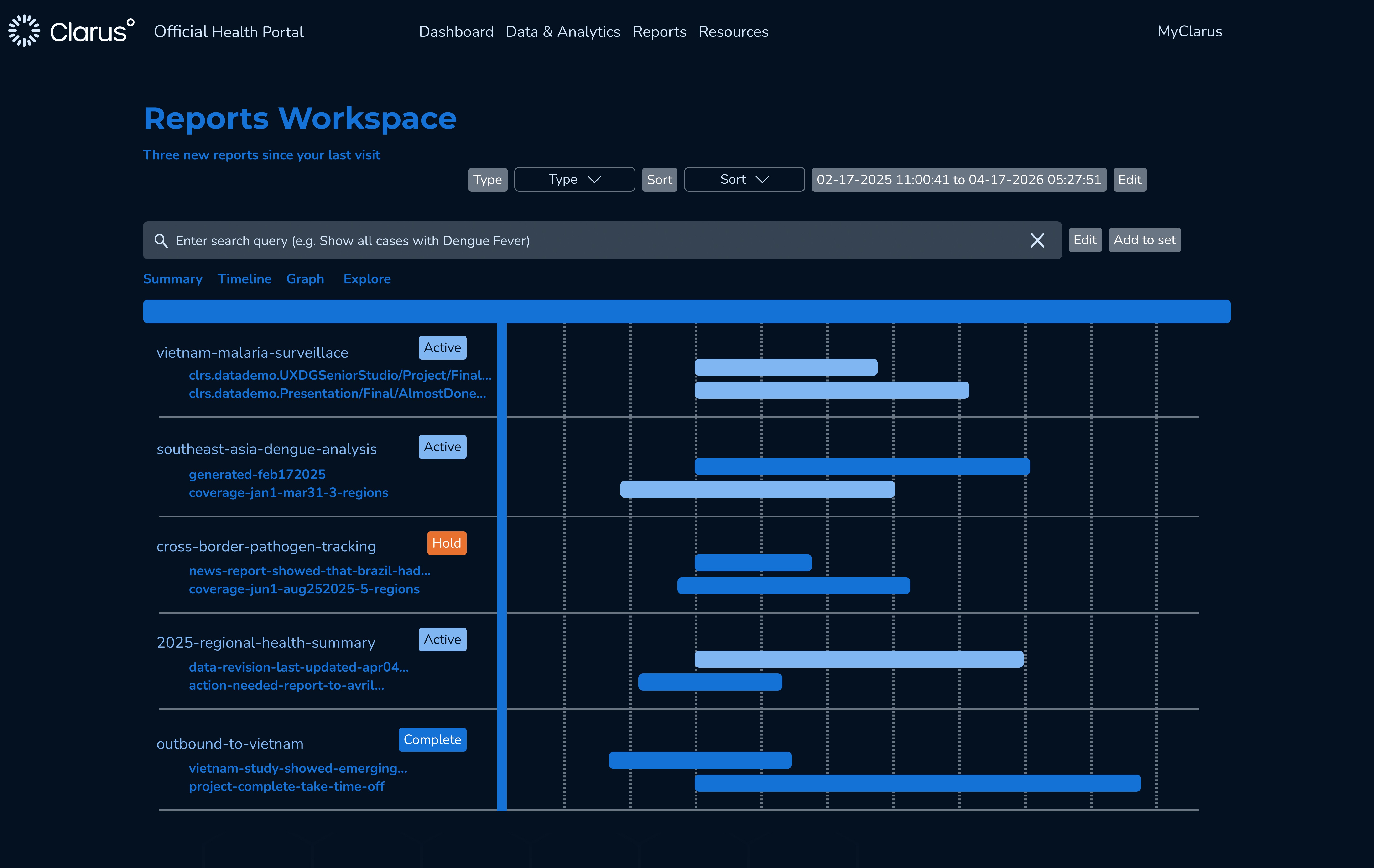
Public Health Professional
The Clarus platform gives health professionals a clear view of real-time, anonymized data from travelers. It helps them spot patterns earlier, understand trends faster, and make more informed decisions when it matters most.
I